Superstrata performance rubber flooring is engineered to withstand extreme impact and heavy traffic. Like any premium architectural finish, its long-term appearance and performance depend on the quality of the maintenance regime.
Rubber flooring needs a specific cleaning approach. Using the wrong chemicals or equipment can degrade the polyurethane binder, dull the colour, and shorten the floor's working life. This guide outlines recommended daily, weekly, and deep-cleaning protocols for Superstrata gym flooring.
The Golden Rules of Rubber Maintenance
Before implementing a cleaning schedule, brief cleaning contractors on the following:
- Avoid bleach, ammonia, solvents, and acidic cleaners. These chemicals can break down rubber and the polyurethane binder, and may invalidate the product warranty.
- Use a pH-neutral cleaner. Cleaning solutions should have a pH level between 7 and 8.
- Don't flood the floor. Rubber is dense and non-porous, but excessive water can seep through tile joints and become trapped beneath the floor, leading to moisture problems or adhesive failure.
- Avoid abrasive pads. Wire brushes and aggressive scrubbing pads can scratch the surface and dull the finish. Use soft nylon brushes or microfibre pads.
Always check the specific product's manufacturer cleaning guidance before introducing new chemicals or equipment, especially in warranty-covered installations.
Initial Post-Installation Clean
A new rubber floor will often have slight residue from the manufacturing process. Clean thoroughly before opening to users.
- Dry clean: Vacuum the entire area to remove construction dust and debris.
- Wash: Use an auto-scrubber fitted with a soft nylon brush. Apply a pH-neutral cleaner diluted per the manufacturer's instructions.
- Extract: Ensure the auto-scrubber removes all dirty water immediately. Avoid leaving standing water on the surface.
- Rinse: Run a second pass with clean water to remove any detergent residue.
Daily Maintenance Protocol
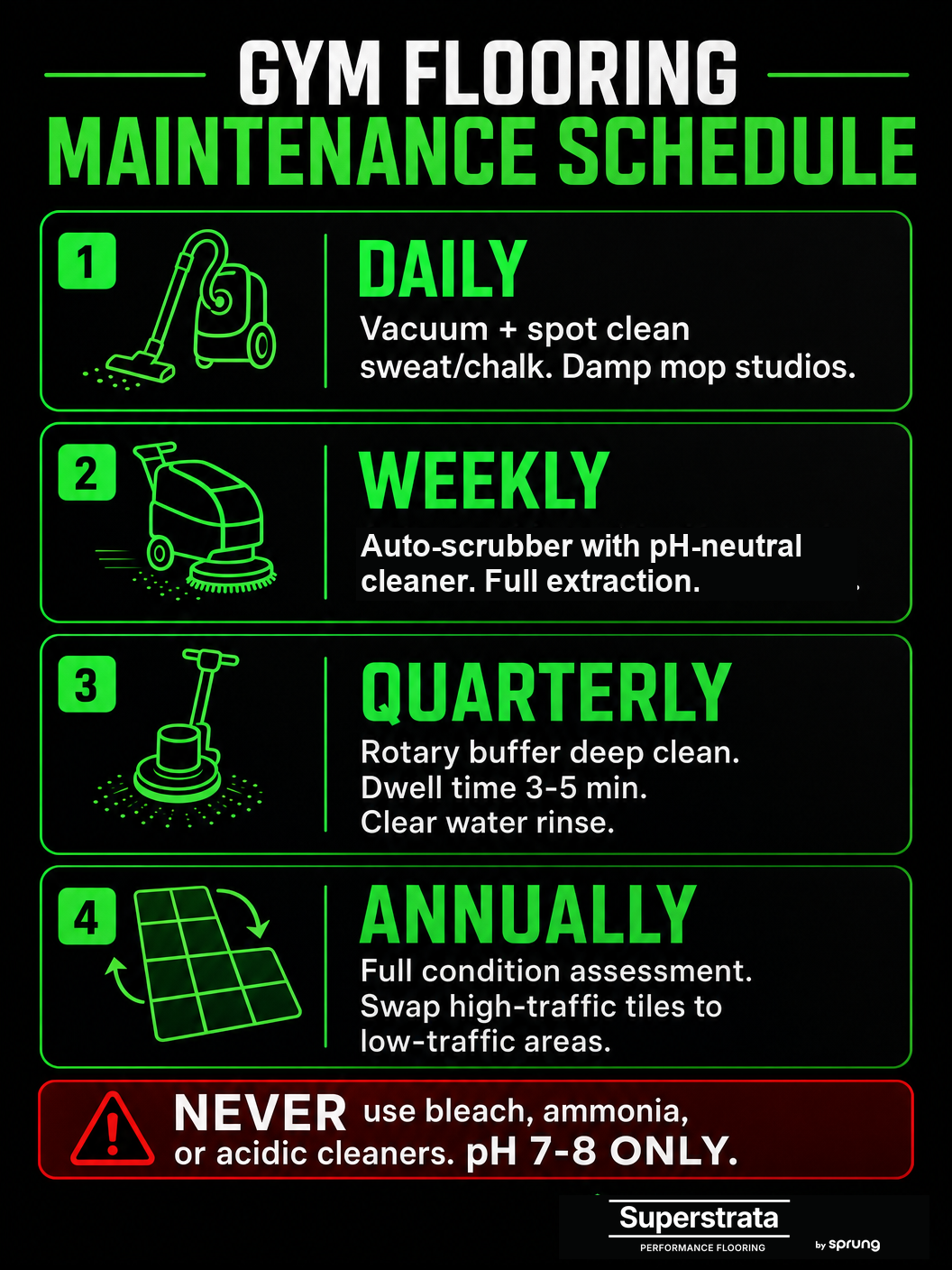
In a busy commercial gym, sweat, chalk, and dirt accumulate quickly. Daily attention is essential for hygiene and slip resistance.
- Dry vacuuming: Vacuum the floor daily using a high-powered vacuum with a soft brush attachment. This removes abrasive dirt particles that act like sandpaper under foot traffic.
- Spot cleaning: Wipe up sweat, spills, and dropped chalk promptly using a microfibre cloth and diluted pH-neutral cleaner.
- Light mopping: In cardio and studio zones, use a damp (not wet) microfibre flat mop with a pH-neutral cleaner. Wring the mop out thoroughly before applying it.
Weekly Maintenance Protocol
Once a week, the floor benefits from a more thorough mechanical clean to lift embedded sweat and oils.
- Auto-scrubbing: Use a walk-behind or ride-on auto-scrubber fitted with a soft cylindrical brush or a soft cleaning pad.
- Solution: Use a pH-neutral enzymatic cleaner. Enzymatic cleaners work well in gyms because they break down protein and oil residues from sweat.
- Extraction: Ensure the vacuum squeegee is in good condition and extracts all moisture.
Quarterly Deep Cleaning
Every three to four months, a deep clean helps restore traction and appearance.
- Heavy scrubbing: Use a rotary floor machine at low speed (150–200 RPM) with a soft brush or appropriate cleaning pad.
- Dwell time: Apply pH-neutral cleaning solution and allow it to dwell for three to five minutes to loosen stubborn grime. Don't let the solution dry on the surface.
- Agitate and extract: Scrub the floor with the rotary machine, then extract the dirty solution with a wet vacuum.
- Clear water rinse: This step matters. Detergent residue left on the floor attracts dirt and can become slippery. Mop or auto-scrub with clean warm water to remove all chemical residue.
Dealing with Gym Chalk
Magnesium carbonate gym chalk is the main aesthetic challenge for rubber flooring. It gets pressed into the surface and is difficult to remove with standard mopping.
Recommended approach:
- Don't use water as the first step. Water turns chalk into a paste that sets into the rubber.
- Use a stiff nylon brush to agitate dry chalk out of the surface.
- Vacuum the loosened chalk dust immediately.
- Once dry chalk has been lifted, spot-clean affected areas with a damp microfibre cloth and pH-neutral cleaner.
Summary
A consistent pH-neutral cleaning regime protects the investment in Superstrata flooring. Avoid harsh chemicals and excessive water, and the floor will retain its performance, slip resistance, and appearance over many years of commercial use.
For recommendations on approved pH-neutral cleaning chemicals, contact the Superstrata team at info@superstrata.fit.